Understanding Temporary Reactions When Starting Advanced Nutrition
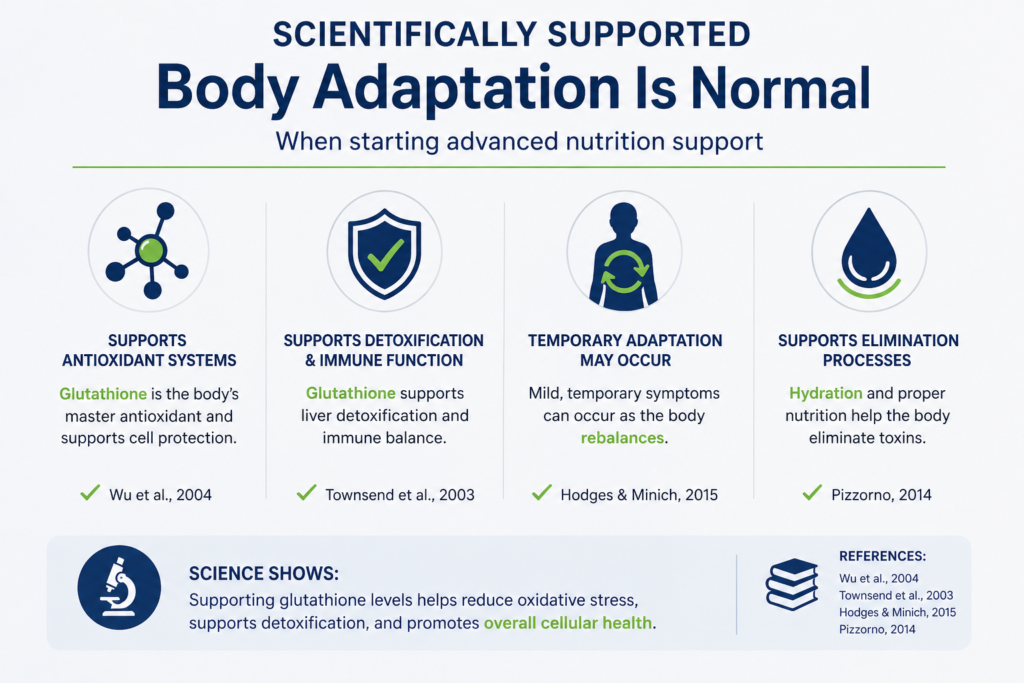
A Science-Based Perspective on Body Adaptation and Glutathione Support
When individuals begin a new nutritional protocol—especially one aimed at improving cellular health—some may notice temporary changes in how they feel. These experiences are often described informally as a “healing crisis,” but in scientific and clinical contexts, it is more accurate to refer to them as transient physiological adaptations.
This article explains what may be happening in the body, why it occurs in some individuals, and how to navigate the process safely and effectively.
1. The Role of Cellular Defense and Glutathione
At the center of many advanced nutritional strategies is Glutathione, often referred to as the body’s “master antioxidant.”
Glutathione plays a critical role in:
- Neutralizing reactive oxygen species (oxidative stress)
- Supporting detoxification pathways in the liver
- Regulating immune responses
- Maintaining redox balance at the cellular level
Scientific literature consistently shows that low glutathione levels are associated with increased oxidative stress and chronic disease states.
📚 For example:
- Oxidative Stress is strongly linked to metabolic disorders, neurodegeneration, and aging (Pizzorno, 2014).
- Glutathione depletion has been observed in conditions such as diabetes, cardiovascular disease, and immune dysfunction (Wu et al., 2004).
2. Why Some People Experience Temporary Symptoms
When nutritional support enhances antioxidant capacity—such as through precursors like Immunocal—the body may begin to shift its internal balance (homeostasis).
This can involve:
- Increased detoxification activity in the liver
- Modulation of inflammatory pathways
- Changes in gut microbiota and digestion
These shifts may lead to temporary, mild symptoms, especially in individuals with:
- High baseline oxidative stress
- Poor dietary habits
- Low hydration
- Sedentary lifestyle
3. Common Transient Reactions (Not Universal)
It is important to emphasize: many people experience no symptoms at all.
However, when present, reported reactions may include:
- Mild headaches
- Temporary fatigue
- Digestive changes (gas, bloating, altered bowel movements)
- Flu-like sensations
- Skin breakouts
From a physiological standpoint, these may reflect:
- Changes in inflammatory signaling
- Microbiome adjustments
- Metabolic recalibration
📚 Supporting evidence:
- Detoxification processes (Phase I and II liver pathways) can temporarily increase metabolite load, which may affect subjective well-being (Hodges & Minich, 2015).
- Changes in antioxidant status can influence cytokine activity and immune signaling (Townsend et al., 2003).
4. Distinguishing Adaptation vs. Adverse Effects
This distinction is critical for safety and credibility.
Likely Normal Adaptation:
- Mild intensity
- Short duration (a few days)
- Gradual improvement
- Does not interfere significantly with daily life
Seek Medical Guidance If:
- Symptoms are severe or worsening
- Persistent nausea, vomiting, or strong pain occurs
- Symptoms last more than 5–7 days without improvement
- There are pre-existing medical conditions
5. Strategies to Support the Body During This Phase
1. Hydration
Adequate water intake supports:
- Renal elimination
- Circulation of metabolites
- Cellular function
Recommended baseline: ~30–35 ml/kg body weight (adjust individually).
2. Gradual Introduction
Starting with a lower intake and increasing progressively may help reduce the likelihood of noticeable reactions.
3. Nutritional Quality
A diet rich in:
- Vegetables (especially cruciferous)
- High-quality protein
- Natural antioxidants
can support endogenous detoxification pathways.
4. Rest and Recovery
Sleep plays a major role in:
- Cellular repair
- Immune regulation
- Hormonal balance
5. Light Physical Activity
Gentle movement (e.g., walking) supports:
- Circulation
- Lymphatic flow
- Metabolic efficiency
6. Key Perspective: Symptoms Are Not Required for Benefits
A common misconception is that “feeling something” is necessary for a protocol to be effective.
From a scientific standpoint:
Physiological improvements can occur without any noticeable symptoms.
Many individuals experience benefits such as:
- Improved energy stability
- Better recovery
- Enhanced well-being
without any transitional discomfort.
7. Final Considerations
The human body is highly adaptive. When provided with improved nutritional inputs—especially those that support antioxidant systems—it may undergo a period of adjustment.
However:
- These responses are individual and not universal
- They should be mild and temporary
- Any concerning symptoms should always be evaluated professionally
A balanced, informed approach ensures both safety and effectiveness.
Scientific References
- Wu, G., Fang, Y.-Z., Yang, S., Lupton, J. R., & Turner, N. D. (2004).
Glutathione metabolism and its implications for health.
Journal of Nutrition, 134(3), 489–492. - Townsend, D. M., Tew, K. D., & Tapiero, H. (2003).
The importance of glutathione in human disease.
Biomedicine & Pharmacotherapy, 57(3–4), 145–155. - Pizzorno, J. (2014).
Glutathione!
Integrative Medicine, 13(1), 8–12. - Hodges, R. E., & Minich, D. M. (2015).
Modulation of metabolic detoxification pathways using foods and food-derived components.
Journal of Nutrition and Metabolism.